Astrobiology & Geology Outreach

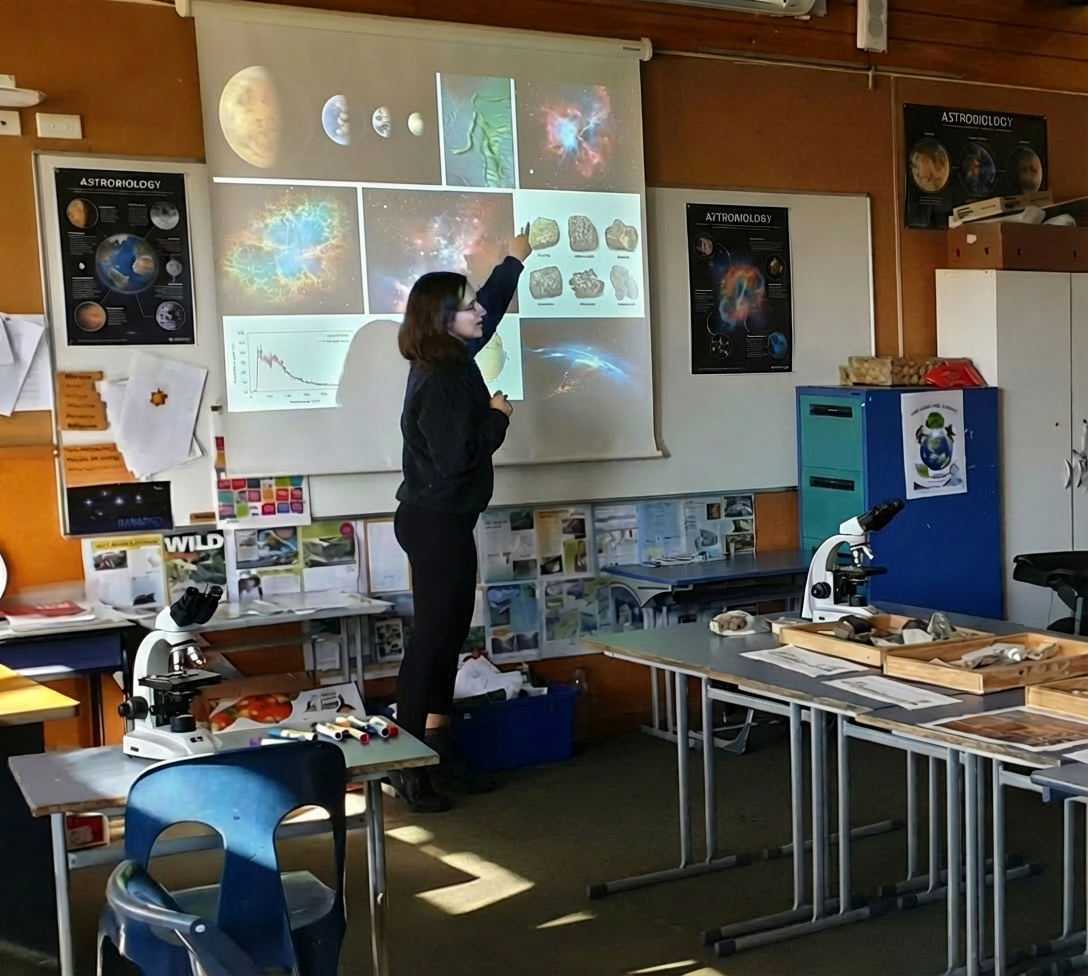
I deliver astrobiology-focused science outreach grounded in geology, exploring ancient Earth life, extreme environments, and what they reveal about life beyond Earth. I run STEM school visits, classroom talks, field-based experiences, and public lectures, adapting my communication style and tone to suit each audience and delivery format—whether that’s engaging primary school students through hands-on curiosity, or presenting to general and professional audiences with greater technical depth. Currently, I’m pivoting towards social media outreach for Millennial and Gen Z audiences, using accessible and playful communication styles intentionally designed to engage those generations, while continuing broader public engagement across platforms and formats.

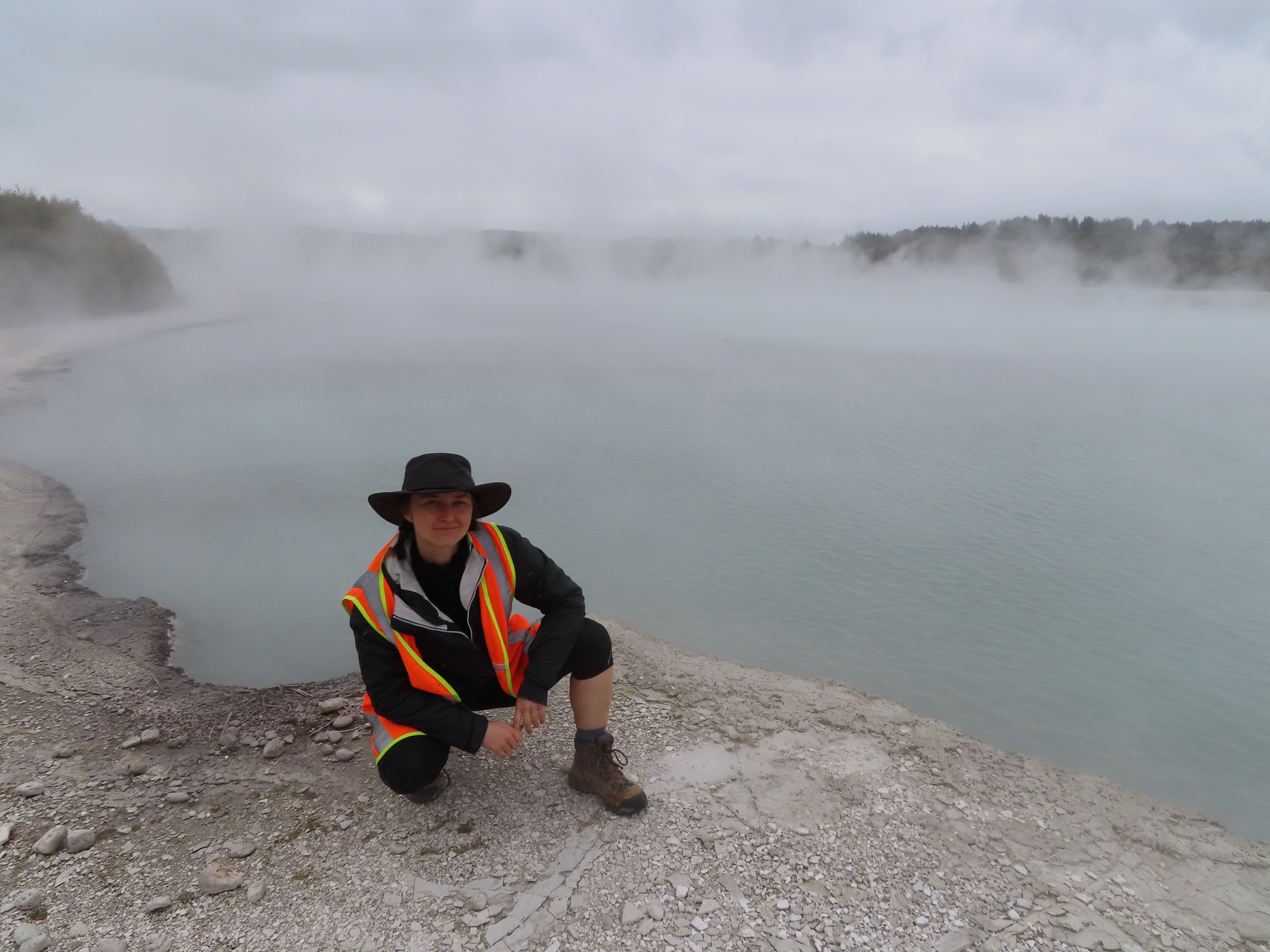
Dr Michaela J. Dobson in Affiliation with New Zealand Astrobiology Network

Outreach and Engagement Manager | Principal Research Scientist

Social Media

My social media channels are intentionally crafted for Millennial and Gen Z audiences, using accessible language, humour, and culturally relevant formats to translate cutting-edge astrobiology and geoscience research into engaging, digestible content. This approach is a deliberate communication strategy—designed to meet younger audiences where they are and build genuine scientific literacy in generations who consume content differently. The tone and style reflect the platform and audience, not the full breadth of my professional work or expertise.

Astrobiology Outreach Focus

I merge geology and biology to explore ancient life, planetary habitability, and analog environments, delivering engaging talks and hands-on workshops for learners of all ages.
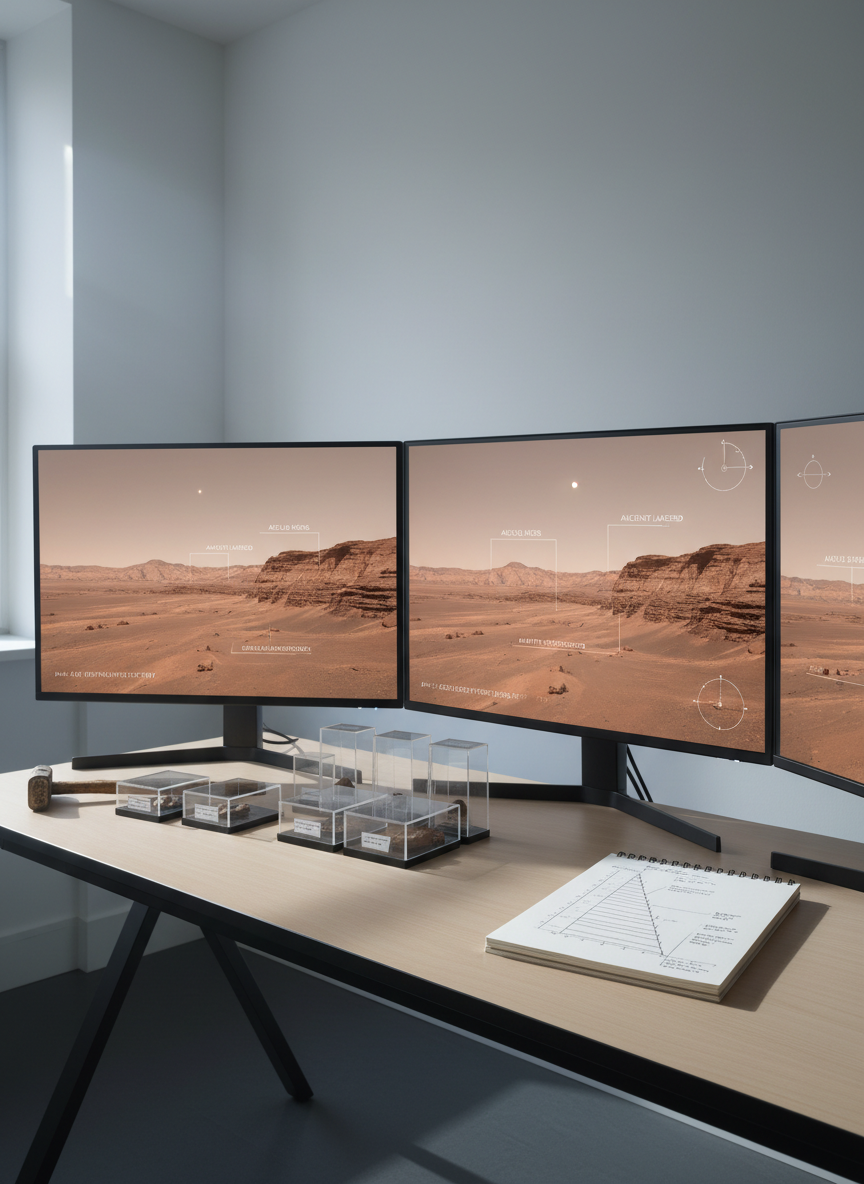
A high-resolution, photographic realism scene of a rocky Martian landscape displayed across multiple sleek, thin-bezel monitors on a modern black metal and light-wood desk. The screens show layered sedimentary cliffs, dusty red plains, and a pale sky with a tiny distant Sun, all annotated with clean, semi-transparent geological labels and simple orbit diagrams. Around the monitors, neatly arranged are rock samples in small clear acrylic boxes, a geological hammer, and a spiral-bound field notebook opened to a sketched stratigraphic column. Soft, cool daylight filters in from an unseen window, creating gentle reflections on the monitors and subtle shadows on the desk. Shot at eye level with a slight three-quarter angle, the composition feels organized, professional, and calm, conveying expert astrobiology analysis in a contemporary, minimalist workspace.
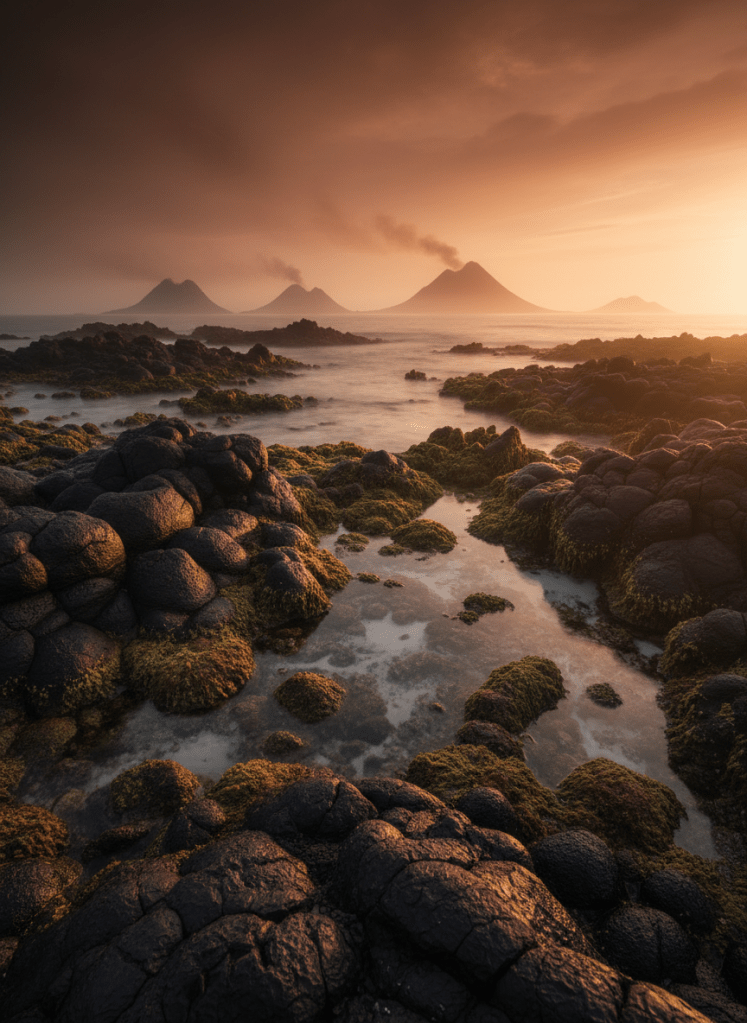
A cinematic, photographic realism panorama of an imagined early Earth shoreline, viewed from a low angle at the water’s edge. Jagged dark basalt and pillow lavas frame shallow tidal pools filled with cloudy, mineral-rich water, their surfaces broken by matted, greenish microbial films clinging to rock. In the distance, low, hazy volcanic islands exhale thin plumes under a thick, copper-tinted atmosphere. Warm, low-angle sunlight pierces the haze, casting dramatic highlights on wet rock surfaces and long, moody shadows between boulders. Fine mist softens the horizon, creating depth and a sense of alien familiarity. Composition uses the rule of thirds, with detailed foreground textures and a gently blurred background, producing a serious yet awe-filled mood that bridges geology and the origins of life.
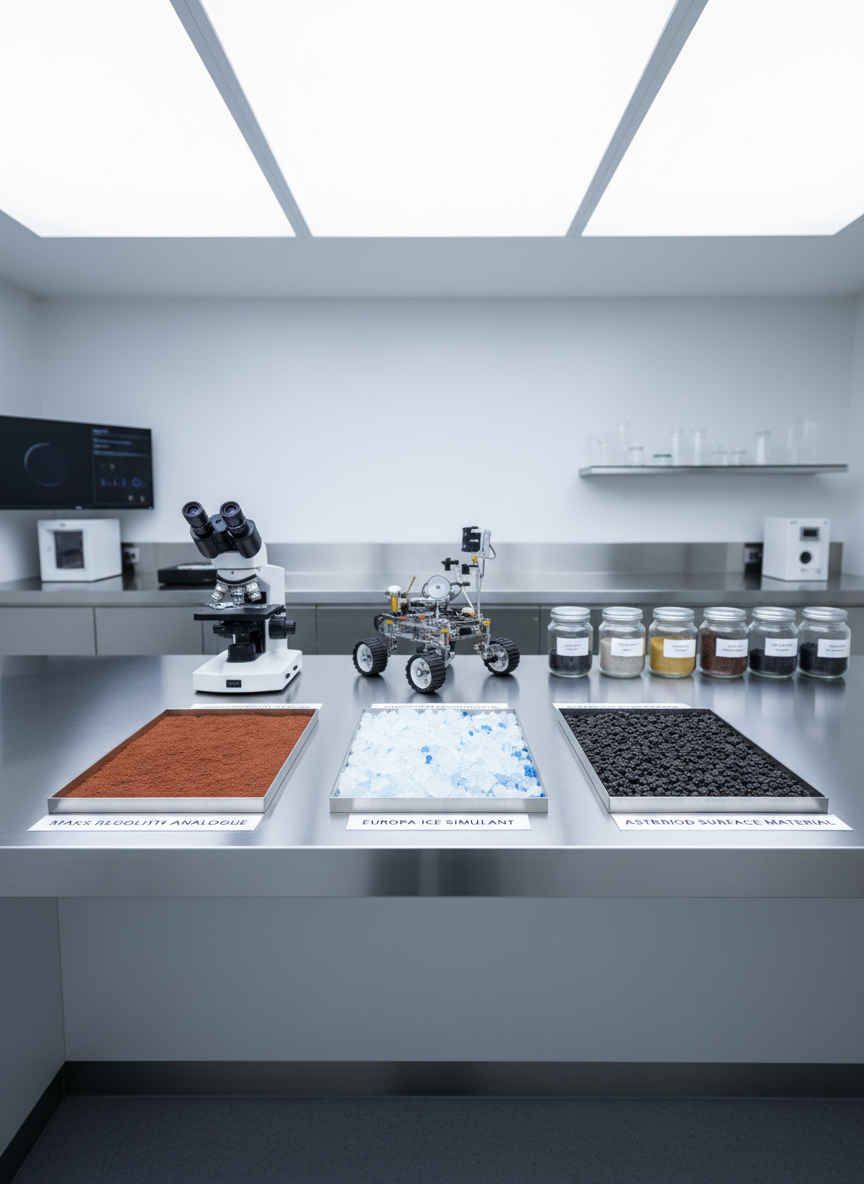
A crisp, photographic realism view inside a clean planetary-analogue laboratory, centered on a wide stainless-steel bench covered with neatly organized extraterrestrial soil simulants. Distinct trays contain fine reddish Mars regolith analogue, coarse icy pellets for Europa, and charcoal-dark, porous grains for an asteroid surface, each labeled with clear, modern typography. Nearby, a high-resolution microscope, a small programmable rover chassis, and a row of sealed sample jars add context. Bright, evenly distributed LED panel lighting from above creates minimal shadows and emphasizes texture differences in each simulant. The mood is precise, methodical, and forward-looking. Shot from an eye-level, slightly wide perspective, with sharp focus across the frame and a clean, modern aesthetic, the composition conveys cutting-edge experimental work linking geology to potential habitats for life beyond Earth.

Studying Astrobiology

Learn more about Astrobiology with NZAN